The Community Nurse’s Blueprint: A Step-by-Step Guide to the Nursing Process
Introduction: From One Patient to an Entire Community
In nursing school, we learn the five essential steps of the nursing process: Assessment, Diagnosis, Planning, Implementation, and Evaluation (ADPIE). It’s the foundational framework for providing excellent patient care. But what happens when your “patient” isn’t a single person in a hospital bed, but an entire neighborhood, a school district, or a specific group of people sharing a common characteristic? Best Offer AIWrappers Bundle Deal
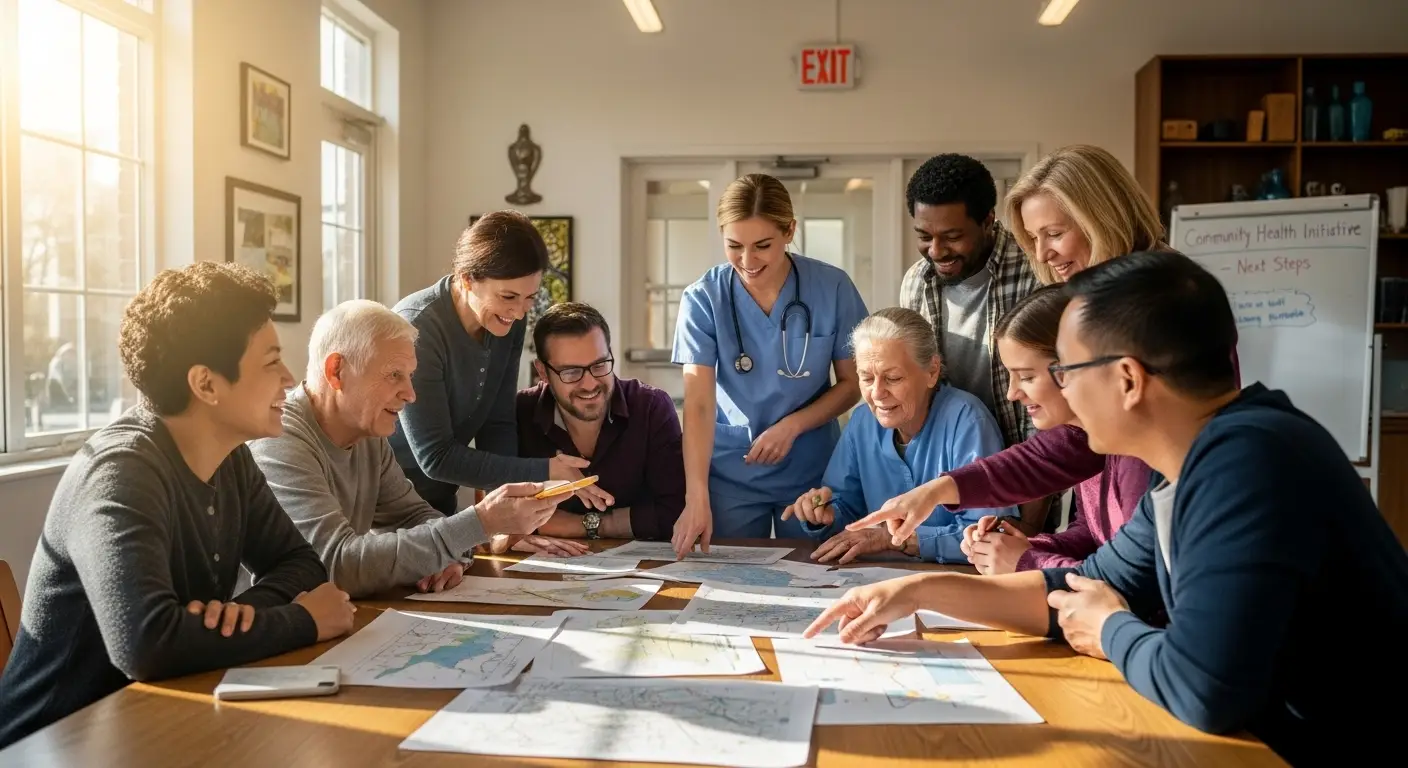
This is the world of community health nursing. Here, the nursing process expands in scale and complexity, transforming from a microscope focused on one individual to a wide-angle lens capturing the health of a whole population. This post will serve as your detailed blueprint, walking you through each step of the nursing process within a community context, from initial identification to conducting vital care services.
Step 1: Comprehensive Community Assessment: Seeing the Big Picture
This is the most critical and data-intensive phase. Before we can fix a problem, we must understand it from every angle. A community assessment is not just about identifying sickness; it’s about understanding the community’s context, culture, strengths, and challenges. This phase can be broken down into several key components:
https://besthealthfunda.blogspot.com/
- Community Identification: Defining Your “Patient”
First, you must define the boundaries of the community you are serving. A community can be defined by:
- Geography: A specific neighborhood, city, or county with clear physical boundaries (e.g., “the residents of the Eastside housing development”).
- Common Interest or Characteristic: A group of people who share a common interest, experience, or goal. This is a “community of solution.” (e.g., “new mothers in the city,” “employees of a local factory,” or “diabetic patients at a specific clinic”).
- Relational Bonds: A group with shared identity and interpersonal bonds, such as a church congregation or an ethnic group. LEARN MORE
How it’s done: This is often the starting point. It involves using maps, speaking with local government, and talking to residents to understand how they define their own community. BEST DEAL OF AI TOOL UNLIMITED

- Population Composition: Understanding the People
Once you know where or who your community is, you need to understand its demographic makeup. This data provides crucial insights into potential health risks and social determinants of health. You’ll collect data on:
- Age Distribution: Is it a young community with many children, or an aging population?
- Gender and Ethnicity: What is the cultural and racial makeup? This informs culturally competent care.
- Socioeconomic Status: Data on income levels, poverty rates, and education levels.
- Household Types: Number of single-parent homes, multi-generational households, etc.
Data Sources: U.S. Census Bureau, local public health department reports, school district data, and community surveys.
- Health and Allied Resources: Identifying Strengths and Gaps
No community is a blank slate. You must identify all the existing resources (and the lack thereof) that can impact health. This includes:
- Health Resources: Hospitals, primary care clinics, dental offices, mental health services, pharmacies, and public health departments.
- Allied Resources:
- Food: Grocery stores, farmers’ markets, food banks. Are they accessible? Do they offer fresh, healthy options?
- Safety: Police presence, fire services, street lighting, crime rates.
- Recreation: Parks, playgrounds, community centers, gyms. Are they safe and well-maintained?
- Transportation: Public transit routes, walkability, bike lanes.
- Social Support: Churches, community groups, non-profits, senior centers.
How it’s done: A windshield survey is a classic method where the nurse drives or walks through the community, making systematic observations. This is supplemented by creating a resource map and interviewing community leaders.
Step 2: Community Diagnosis: Naming the Challenge
After gathering all this data, you synthesize it to identify the community’s key health problems. Unlike an individual diagnosis (e.g., “Impaired Gas Exchange”), a community diagnosis addresses a population-level issue.
A strong community diagnosis has three parts:
- The Problem/Risk: The specific health issue identified.
- The Population: The specific community or aggregate affected.
- The Related Factors (Etiology): The “why” behind the problem, based on your assessment data.
Example:
“Increased risk of [Problem] childhood asthma exacerbations [among] children aged 5-12 in the industrial Southside neighborhood, [related to] high levels of local air pollution from the nearby factory and a lack of knowledge among parents about asthma trigger management, [as evidenced by] school absentee rates for respiratory illness being 50% higher than the district average and data from the local asthma clinic.”
Step 3: Planning Community Nursing Care Services
With a clear diagnosis, you can now create a roadmap for action. Planning is a collaborative process that must involve community members and stakeholders to ensure the plan is relevant, realistic, and culturally appropriate.
Key elements of the planning phase include:
- Prioritizing Diagnoses: You may have identified several problems. Which one is most urgent? Which one is most feasible to address with available resources?
- Setting SMART Goals: Goals must be Specific, Measurable, Achievable, Relevant, and Time-bound.
- Bad Goal: “Improve community health.”
- SMART Goal: “Reduce the rate of childhood asthma-related emergency room visits by 15% among Southside neighborhood children within 12 months.”
- Identifying Interventions: Brainstorm specific actions to achieve your goals. These could include:
- Health Education: Workshops on asthma trigger-proofing homes.
- Screening Programs: In-school asthma screenings.
- Policy Change: Advocating with the city council for stricter air quality monitoring.
- Collaboration: Partnering with the local clinic to create a streamlined referral process.
Step 4: Implementation: Conducting the Services
This is the “doing” phase where the plan is put into motion. The nurse’s role here is often that of a coordinator, educator, advocate, and direct care provider. This is where you are conducting community nursing care services.
Examples of implementation in action:
- Running the Workshop: Hosting the planned “Asthma-Proof Your Home” workshop at the local community center.
- Coordinating the Clinic: Working with the school nurse and a local pediatric clinic to run an in-school screening day.
- Advocating for Change: Presenting your assessment data at a town hall meeting to advocate for the new air quality policy.
- Building Partnerships: Regularly meeting with the community leaders and organizations you identified in the assessment phase to ensure continued buy-in and support.
Flexibility is key. A community is a dynamic environment, and you must be prepared to adapt your plan as you go.
Step 5: Evaluation: Measuring Our Impact
Did the plan work? Evaluation is the final, crucial step that closes the loop. It determines whether your interventions were effective and helps you plan for the future.
- Formative Evaluation: This happens during implementation. Are people showing up to the workshops? Is the screening process running smoothly? It allows for real-time adjustments.
- Summative Evaluation: This happens after the implementation period. Did you meet your SMART goal? You’ll look at the data again:
- Have ER visit rates for asthma actually decreased by 15%?
- Do pre- and post-workshop surveys show an increase in parental knowledge?
- Did the city council pass the new policy?
The results of the evaluation feed directly back into the assessment phase, creating a continuous cycle of improvement for the community’s health.
Conclusion: The Cycle of Care
The nursing process in a community setting is a powerful, cyclical tool. It transforms the nurse from a caregiver for the sick into an architect of health for an entire population. By systematically assessing, diagnosing, planning, implementing, and evaluating, community health nurses can empower residents, build stronger support systems, and create lasting, positive change that ripples through generations.