The Detective Work of Public Health: A Deep Dive into the Principles of Epidemiology
Ever wondered how scientists tracked the source of a food poisoning outbreak to a specific batch of spinach? Or how we know that smoking causes lung cancer? The answer lies in the fascinating field of epidemiology, the bedrock science of public health. AIWrappers Mega Unlimited
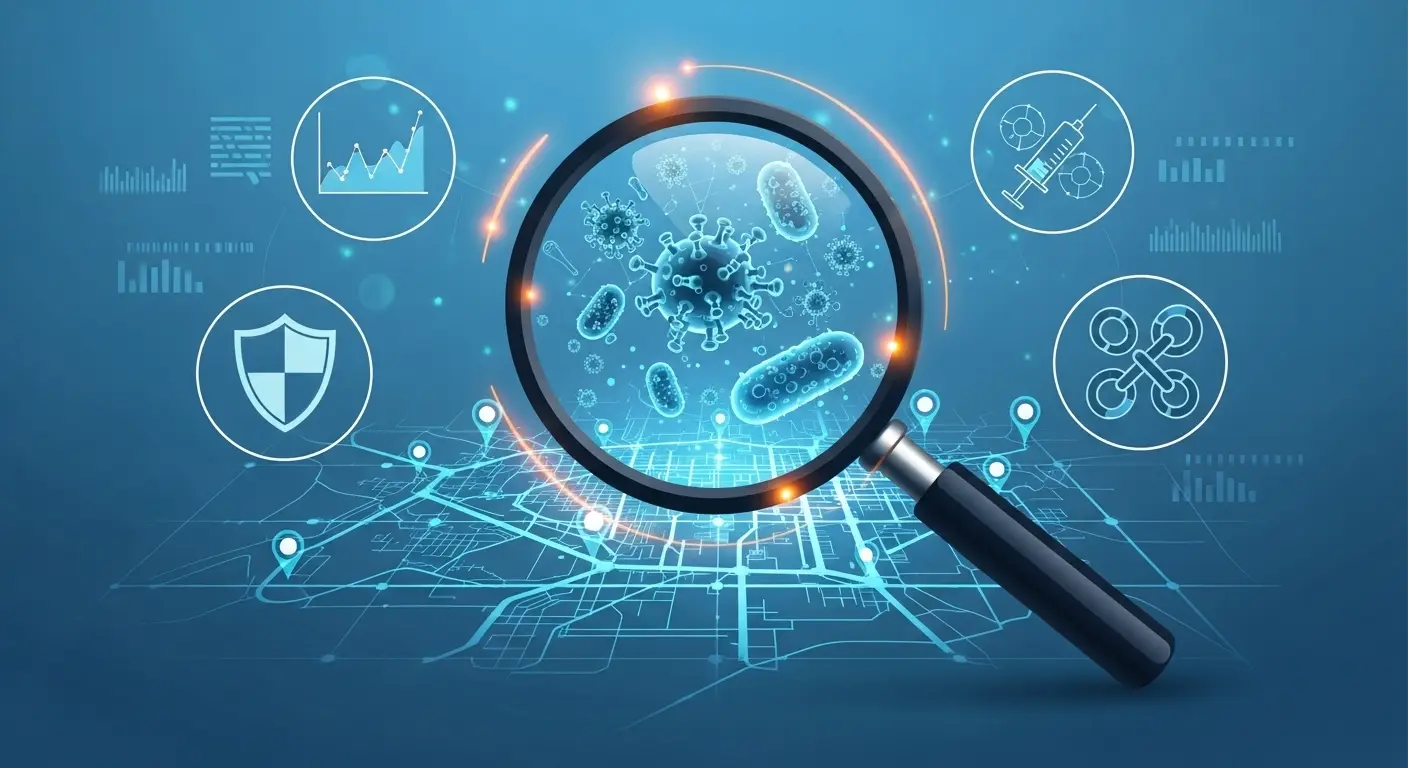
Think of an epidemiologist as a “disease detective.” They sift through data, look for patterns, and ask critical questions—Who is getting sick? What do they have in common? Where are they located? When did their illness start?—to solve the mysteries of disease in a population.
This guide will walk you through the core principles and methods that these detectives use to protect and improve our collective health.
- a) What is Epidemiology? The Aims and the Two Faces of Disease:
Definition and Aims : AIWrappers Comercial
At its core, epidemiology is the study of the distribution (frequency, patterns) and determinants (causes, risk factors) of health-related states or events in specified populations, and the application of this study to the control of health problems.
Let’s break that down:
- Distribution: This is the “who, where, and when.” It involves describing health events by person, place, and time.
- Determinants: This is the “how and why.” It involves identifying the underlying causes and risk factors that make certain groups more likely to experience a disease.
- Populations: Epidemiology focuses on groups of people, not individuals. A clinician treats a patient; an epidemiologist treats a community. HEALTH ASSESSMENT
The primary aims of epidemiology are:
- To describe the health status of populations. (e.g., What is the annual number of flu cases in New York?)
- To explain the etiology (cause) of diseases. (e.g., Why is there a sudden increase in measles cases?)
- To predict the occurrence of disease. (e.g., How many hospital beds will we need for the upcoming flu season?)
- To control the distribution of disease by developing and evaluating public health interventions. (e.g., Does a new handwashing campaign reduce infections in schools?)
Communicable vs. Non-Communicable Diseases
Epidemiologists study all kinds of health issues, which generally fall into two categories:
| Feature | Communicable Diseases | Non-Communicable Diseases (NCDs) |
| Definition | An illness caused by an infectious agent (like a bacterium, virus, or parasite) that can be transmitted from one person, animal, or object to another. | A medical condition or disease that is non-infectious and non-transmissible among people. Often chronic in nature. |
| Causation | A specific infectious agent. | Complex, often involving a combination of genetic, physiological, environmental, and behavioral factors. |
| Onset | Often rapid (acute). | Typically slow, progressive (chronic). |
| Examples | Influenza, COVID-19, HIV/AIDS, Tuberculosis, Malaria. https://besthealthfunda.blogspot.com/ | Heart Disease, Cancer, Diabetes, Chronic Respiratory Diseases, Alzheimer’s. |
- b) Basic Tools of Measurement in Epidemiology : https://besthealthfunda.blogspot.com/
To study disease, epidemiologists need precise tools. The most fundamental are rates, ratios, and proportions.
- Count: The simplest measure. The absolute number of cases or health events (e.g., “10 people died from the flu”). It’s useful but doesn’t tell you the risk.
- Ratio: A comparison of two unrelated quantities (e.g., the number of doctors per 1,000 people).
- Proportion: A type of ratio where the numerator is included in the denominator. It’s often expressed as a percentage (e.g., 50 out of 200 students are vaccinated, or 25%).
- Rate: The most important tool. It measures the frequency of an event in a population over a specified period of time. It includes time in the denominator and indicates how fast the disease is occurring.
Two crucial rates are Incidence and Prevalence:
- Incidence Rate: Measures the number of new cases of a disease that develop in a population at risk during a specified time period.
- Analogy: Think of it as the speed at which new raindrops start falling.
- Use: It tells us about the risk of developing a disease.
- Prevalence Rate: Measures the total number of existing cases (both new and old) of a disease in a population at a specific point in time.
- Analogy: Think of it as a snapshot of all the puddles on the ground at one moment.
- Use: It tells us about the overall burden of a disease in a community.
- c) Uses of Epidemiology
Epidemiology is not just an academic exercise. Its findings are used in countless practical ways:
- Identify Causes and Risk Factors: The classic example is the work of Doll and Hill, which definitively linked smoking to lung cancer.
- Determine the Extent of Disease: By measuring incidence and prevalence, communities can understand the true burden of a disease and allocate resources accordingly.
- Study the Natural History and Prognosis: Epidemiology helps us understand how a disease progresses from start to finish (see “Spectrum of Disease” below).
- Evaluate Interventions: Did a new vaccine work? Was a public health campaign effective? Epidemiology provides the methods to answer these questions.
- Provide a Foundation for Public Policy: Evidence from epidemiological studies informs laws and regulations related to health, such as seatbelt laws, smoke-free policies, and food safety standards.
- d) The Disease Cycle (Chain of Infection)
For a communicable disease to spread, a series of events must occur. This is called the Chain of Infection. Public health efforts are aimed at breaking one or more links in this chain.
- Infectious Agent: The pathogen (bacterium, virus, fungus, etc.).
- Reservoir: The place where the agent normally lives and multiplies (e.g., humans, animals, water, soil).
- Portal of Exit: The path by which the agent leaves the reservoir (e.g., respiratory tract via coughing, blood via a needle).
- Mode of Transmission: How the agent travels from the reservoir to the next host (see “Disease Transmission” below).
- Portal of Entry: The path by which the agent enters a new host (e.g., broken skin, mucous membranes).
- Susceptible Host: An individual who is vulnerable to the infection, often due to a lack of immunity.
Breaking the chain: If you treat the infected person (break link 1), purify the water (break link 2), or vaccinate the host (break link 6), you can stop the spread of disease.
- e) Spectrum of Disease & The Iceberg Concept
Disease is not an all-or-nothing event. It exists on a spectrum, from exposure to a final outcome.
- Exposure: Coming into contact with a cause.
- Subclinical Disease: The person is infected, but shows no symptoms (asymptomatic). They may still be able to transmit the disease.
- Clinical Disease: The person shows signs and symptoms of the illness.
- Outcome: The disease resolves in either recovery, disability, or death.
This leads to the Iceberg Concept of Disease. For most diseases, the number of visible, symptomatic cases (the tip of the iceberg) is far smaller than the number of hidden, asymptomatic or undiagnosed cases (the part of the iceberg underwater). This is critically important because these hidden cases can be a major source of transmission. https://besthealthfunda.blogspot.com/

- f) Levels of Prevention of Disease
The goal of public health is to prevent disease before it happens. This is done at three main levels:
- Primary Prevention:
- Goal: To prevent the disease from ever occurring.
- Target: Healthy individuals.
- Actions: Immunizations, health education (e.g., on diet and exercise), wearing seatbelts, smoking cessation programs.
- Secondary Prevention:
- Goal: To detect and treat disease at its earliest stages to slow or halt its progression.
- Target: Individuals who are asymptomatic but have early disease.
- Actions: Screening programs like mammograms for breast cancer, blood pressure checks for hypertension, and Pap smears for cervical cancer.
- Tertiary Prevention:
- Goal: To reduce the complications and disability of an established disease.
- Target: Patients with a diagnosed disease.
- Actions: Physical therapy for stroke patients, diabetes management to prevent complications, rehabilitation after an injury.
- g) Disease Transmission – Direct and Indirect :
This is the “Mode of Transmission” link in the chain of infection.
Direct Transmission
The infectious agent is transferred through direct contact between the infected source and the susceptible host.
- Direct Contact: Physical touching, kissing, or sexual contact (e.g., HIV, scabies).
- Droplet Spread: Spread through respiratory droplets from coughing, sneezing, or talking. These droplets are large and travel only a short distance (less than 1 meter) before falling. (e.g., Influenza, the common cold).
Indirect Transmission
The agent is carried from the reservoir to the host by an intermediate item.
- Airborne: Very small particles (aerosols) containing the agent remain suspended in the air for long periods and can travel long distances (e.g., Tuberculosis, Measles).
- Vehicle-Borne: Transmitted through a contaminated inanimate object or substance (the “vehicle”).
- Fomites: Inanimate objects like doorknobs, toys, or surgical instruments.
- Other Vehicles: Contaminated food, water, or blood products.
- Vector-Borne: Transmitted by a living organism, usually an insect.
- Mechanical: The vector carries the agent on its body (e.g., a fly landing on food).
- Biological: The agent multiplies within the vector before being transmitted (e.g., mosquitoes transmitting malaria, ticks transmitting Lyme disease).
- h) Immunizing Agents, Immunization, and National Immunization Schedule:
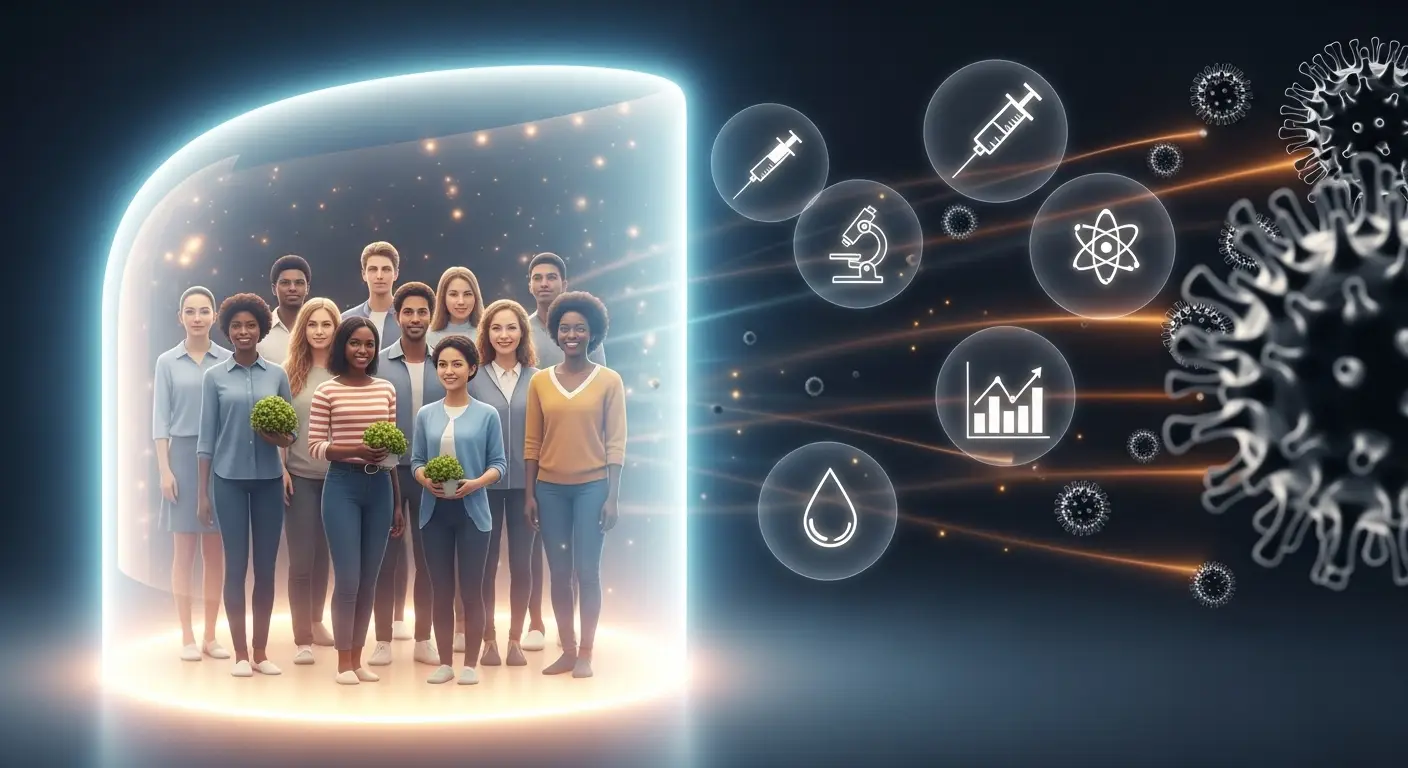
Immunization is one of the greatest triumphs of public health and a cornerstone of primary prevention.
- Immunization: The process of making a person immune or resistant to an infectious disease, typically by the administration of a vaccine.
- Immunizing Agents (Vaccines): These are biological preparations that stimulate the body’s immune system to produce antibodies against a specific disease, creating “memory” to fight off future infections. Types include:
- Live-attenuated: A weakened version of the living virus (e.g., MMR, chickenpox).
- Inactivated: Made from a killed version of the virus or bacteria (e.g., Polio vaccine (Salk), Hepatitis A).
- Toxoid: Contains a toxin made by the pathogen that has been made harmless (e.g., Tetanus, Diphtheria).
- Subunit/Conjugate: Contains only pieces of the pathogen (e.g., Hib, Hepatitis B).
- National Immunization Schedule: Every country has a recommended schedule of vaccinations for children and adults. This schedule is carefully designed to provide protection at the earliest possible age when the immune system can respond effectively and before a child is likely to be exposed to the disease. It’s crucial for both individual protection and herd immunity, where a high vaccination rate in the population protects those who are vulnerable and cannot be vaccinated.
- i) Control of Infectious Diseases
Controlling an infectious disease involves a multi-pronged strategy aimed at breaking the chain of infection at its weakest links. Key measures include:
- Controlling the Reservoir:
- Isolation: Separating infected persons from others.
- Quarantine: Restricting the movement of healthy people who may have been exposed.
- Treatment: Using antibiotics or antivirals to clear the infection.
- Animal Control: Vaccinating or culling infected animal reservoirs.
- Interrupting Transmission:
- Hand hygiene, environmental sanitation, and disinfection.
- Safe water and food handling.
- Vector control (e.g., mosquito nets, insecticides).
- Wearing masks and ensuring proper ventilation.
- Protecting the Susceptible Host:
- Vaccination.
- Health education to promote healthy behaviors.
- Improving nutrition and overall health status.
- j) Disinfection
Disinfection is a critical part of interrupting transmission.
- Definition: Disinfection is the process of eliminating most or all pathogenic microorganisms, except bacterial spores, on inanimate objects.
- It is different from:
- Sterilization: A process that destroys all microbial life, including spores. Used for critical items like surgical instruments.
- Antisepsis: The application of a chemical to living tissue (like skin) to prevent infection.
Effective disinfection depends on factors like the type of microorganism, the concentration of the disinfectant, and the contact time. Common disinfectants include bleach solutions, alcohol, and hydrogen peroxide. Proper disinfection in hospitals, homes, and public spaces is a simple yet powerful tool for disease control.
Create 1000s of Monetizable Real AI Tools By Simply Typing What You Want. Click Below Link and Start Earning :