
Colorectal Cancer : Symptoms, Diagnosis, Nursing Management & Nursing Care Plan.
Introduction of Colorectal Cancer :
Colorectal cancer (CRC) is one of the most common cancers worldwide, affecting both the colon and rectum. It usually begins as a noncancerous polyp and gradually progresses into invasive cancer. With early detection and proper nursing management, survival rates are significantly higher.
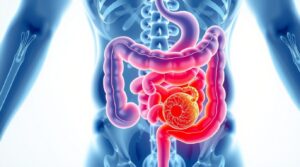
AI Generated Image
Definition of Colorectal Cancer :
Colorectal cancer (CRC) refers to malignant tumors arising from the epithelial lining of the colon or rectum. It is the third most common cause of cancer death in both men and women.
Epidemiology & Risk Factors of Colorectal Cancer :
-
Incidence: It is the third most commonly diagnosed cancer and the second leading cause of cancer-related deaths worldwide.
-
Age: Risk increases significantly after age 50, though incidence is rising in younger populations.
-
Modifiable Risk Factors:
-
Diet: High in red/processed meats, low in fiber, fruits, and vegetables.
-
Lifestyle: Sedentary behavior, obesity, smoking, heavy alcohol use.
-
-
Non-Modifiable Risk Factors:
-
Age (>50 years old).
-
Personal or family history of CRC or adenomatous polyps.
-
Inherited syndromes: Familial Adenomatous Polyposis (FAP), Lynch Syndrome (Hereditary Non-Polyposis Colorectal Cancer or HNPCC).
-
Personal history of Inflammatory Bowel Disease (IBD – Crohn’s disease or Ulcerative Colitis).
-
Pathophysiology of Colorectal Cancer :
The majority of CRCs follow the adenoma-carcinoma sequence:
-
Normal Mucosa: The lining of the colon is healthy.
-
Hyperproliferation: Cells begin to divide rapidly.
-
Early Adenoma: A benign polyp forms.
-
Late Adenoma: The polyp grows larger and develops dysplasia (abnormal cells).
-
Carcinoma: Dysplastic cells acquire the ability to invade through the layers of the colon wall (mucosa, submucosa, muscularis propria), into surrounding tissues, and eventually metastasize to distant organs (most commonly the liver and lungs).
Click Here to Buy👉 Health Products
Clinical Manifestations of Colorectal Cancer :
Symptoms often depend on the tumor’s location and stage.
-
Right-Sided Colon Cancer:
-
Often asymptomatic until late.
-
Dull, vague abdominal pain.
-
Unexplained iron-deficiency anemia (from chronic, unnoticed blood loss).
-
Fatigue, weakness.
-
Dark, tarry stools (melena) may be present.
-
-
Left-Sided Colon Cancer:
-
Changes in bowel habits (diarrhea or constipation).
-
Narrow, pencil-shaped stools (due to obstruction by the tumor).
-
Bright red blood in the stool (hematochezia).
-
Abdominal cramping or pain.
-
Feeling of incomplete evacuation (tenesmus).
-
-
Rectal Cancer:
-
Hematochezia.
-
Tenesmus.
-
Rectal pain.
-
Sensation of a mass.
-
Click Here to Buy👉 Health Products
Nursing Management for Colorectal Cancer
Nursing management is holistic and spans the entire cancer journey: pre-operative, post-operative, and during adjuvant therapies.
1. Pre-Operative Care
-
Psychological Support & Education: Assess anxiety levels. Explain the surgical procedure, stoma creation (if planned), and post-operative expectations (pain management, ambulation, deep breathing).
-
Bowel Preparation: Administer prescribed laxatives (e.g., PEG solution) and enforce a clear liquid diet to empty the bowel and reduce infection risk.
-
Physical Preparation: Ensure informed consent is obtained. Administer prophylactic antibiotics. Teach post-operative exercises (turning, coughing, deep breathing, leg exercises).
2. Post-Operative Care
-
Airway & Breathing: Monitor vital signs. Encourage incentive spirometry, coughing, and deep breathing to prevent atelectasis and pneumonia.
-
Pain Management: Assess pain regularly. Administer analgesics (IV PCA, then oral) as prescribed. Use non-pharmacological methods (positioning, distraction).
-
Fluid & Electrolyte Balance: Monitor I&O, assess for signs of dehydration or fluid overload. Administer IV fluids until bowel function returns.
-
Wound & Stoma Care:
-
Incision: Assess for redness, swelling, drainage, or signs of infection.
-
Stoma: Assess stoma color (should be beefy red; dusky blue indicates ischemia). Monitor output from drains and stoma. Initiate stoma education with an Enterostomal Therapy Nurse (ET nurse).
-
-
GI Function: Monitor for return of bowel sounds and passage of flatus. The patient will be NPO until bowel function resumes, indicated by active bowel sounds and flatus.
-
Mobility: Encourage early ambulation to prevent complications like deep vein thrombosis (DVT), ileus, and pneumonia.
-
Nutrition: Advance diet from clear liquids to solid foods as tolerated once bowel function returns.
3. Management During Chemotherapy/Radiation
-
Manage Side Effects:
-
Nausea/Vomiting: Administer antiemetics prophylactically and as needed.
-
Diarrhea: Common with pelvic radiation (“radiation proctitis”). Administer antidiarrheals, monitor for dehydration, provide perianal skin care.
-
Mucositis: Provide oral care protocols (salt/soda rinses, soft toothbrushes).
-
Bone Marrow Suppression: Monitor for neutropenia (risk of infection), thrombocytopenia (risk of bleeding), and anemia (fatigue). Teach infection prevention.
-
Skin Reactions (Radiation): Keep the skin clean and dry, avoid lotions/perfumes in the treatment field.
-
Nursing Care Plan (NCP) for Colorectal Cancer – Table Format
| Nursing Diagnosis | Goals / Outcomes | Nursing Interventions | Rationale | Evaluation |
| 1. Acute Pain related to surgical incision or tumor growth | • Patient will report pain ≤ 3/10 within 48 hrs. | • Assess pain using standardized scale. • Administer analgesics as prescribed. • Encourage relaxation techniques. • Position for comfort. |
• Pain assessment guides management. • Analgesics reduce pain perception. • Relaxation decreases muscle tension. |
• Patient reports adequate pain relief. |
| 2. Risk for Infection related to surgical site or immunosuppression | • Patient remains afebrile; wound shows no signs of infection. | • Monitor temperature and WBC count. • Assess incision/stoma site regularly. • Maintain sterile dressing changes. • Educate about hygiene. |
• Early detection prevents complications. | • No signs of infection. |
| 3. Imbalanced Nutrition: Less than body requirements related to decreased intake | • Patient maintains/ gains weight within acceptable range. | • Assess dietary intake. • Provide small, frequent meals. • Collaborate with dietician. • Monitor albumin and hemoglobin levels. |
• Ensures adequate nutrition for healing. | • Weight stabilized; labs improved. |
| 4. Risk for Impaired Skin Integrity related to colostomy | • Skin around stoma remains intact. | • Inspect stoma and skin with each pouch change. • Use skin barrier products. • Teach proper pouching technique. |
• Prevents irritation & infection. | • Skin remains intact, no redness. |
| 5. Anxiety related to cancer diagnosis and change in body image | • Patient verbalizes reduced anxiety. | • Provide emotional support. • Encourage expression of feelings. • Provide accurate information about treatment & prognosis. • Refer to support groups. |
• Reduces fear and promotes coping. | • Patient expresses ability to cope. |
| 6. Knowledge Deficit related to disease condition and self-care | • Patient correctly explains disease, treatment & colostomy care. | • Provide written & verbal instructions. • Demonstrate stoma care techniques. • Allow return demonstration. |
• Enhances confidence and self-management. | • Patient demonstrates correct self-care. |
Click Here to Buy👉 Digestive Enzymes Postbiotics Prebiotics Probiotics for Women & Men
Discharge Planning & Health Education :
-
Dietary Modifications:
-
Avoid gas-forming foods (cabbage, beans, eggs) if the patient has a colostomy.
-
Drink at least 2–3 liters of fluid/day (especially for ileostomy patients to prevent dehydration).
-
-
Ostomy Care:
-
Teach how to empty the pouch when 1/3 to 1/2 full.
-
Inspect skin around the stoma for breakdown.
-
-
Follow-Up Screening:
-
Colonoscopy is usually repeated 1 year after surgery.
-
Routine CEA blood tests.
-
-
When to Call the Doctor:
-
Fever > 100.4°F (38°C).
-
Stoma turning dark/purple.
-
No stool output for >3 days (risk of obstruction).
-
Redness/drainage at the incision site.
-